Therapeutic Horticulture
with Joanne Zerdy, Ph.D.
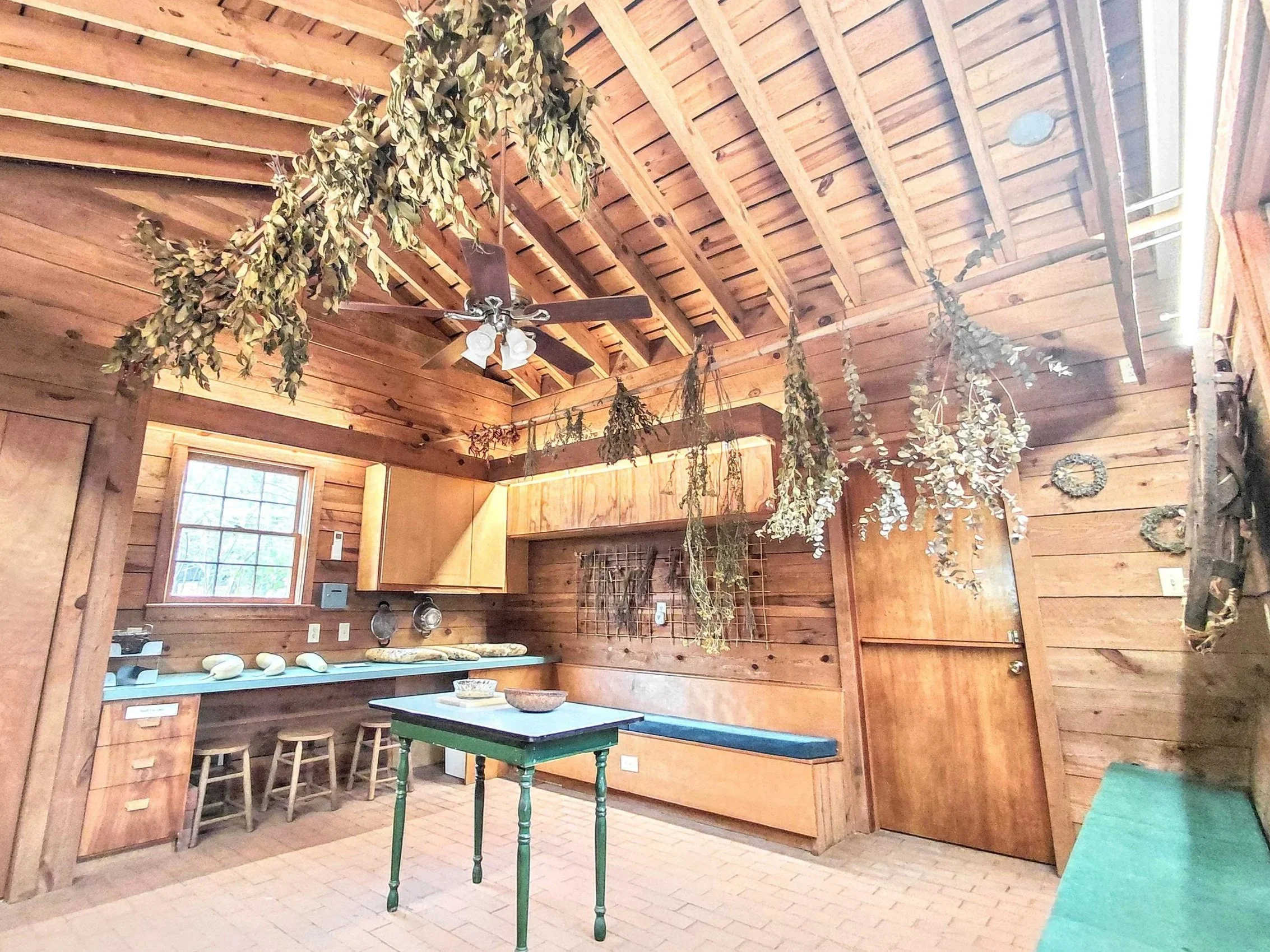
Inside the Drying House in the Herb Garden at the North Carolina Botanical Garden in Chapel Hill, NC
Therapeutic Horticulture (TH) provides a hands-on, evidence-based way of working with plants and plant-related materials to help calm restless minds, regulate overactive nervous systems, and strengthen skills and bodily practices (related to, for example, hand-eye coordination, balance, fine motor skills, and focus/attention).
TH emphasizes process and engagement and not productivity and product. While we can certainly practice TH as we cultivate fruits, vegetables, and herbs for consumption; we can also foreground social interactivity, personal empowerment, and embodied awareness as we work with plants.
Who Benefits from Therapeutic Horticulture? All of us can! While TH has been practiced with those dealing with developmental challenges, declining memory, traumatic injuries, mental health stresses, and more, it can also be used to support the curiosity of preschoolers, the patience of parents, and the community engagement of neighbors. TH allows us to set specific intentions and goals as we work with/in nature.
My approach to Therapeutic Horticulture is enhanced by my work with Herbal Medicine, Permaculture Design, Curriculum Development, Grieving/Healing, Gardening, and Community Organizing. I bring all of this experience with me when I work with you!
Learn more about these services:
TH Workshop Facilitation
TH Nature-Based Curriculum Design
TH Healing Garden Design
Herbal Supports for Compassionate Warriors Workshop
Visit Finlay’s Garden Shop
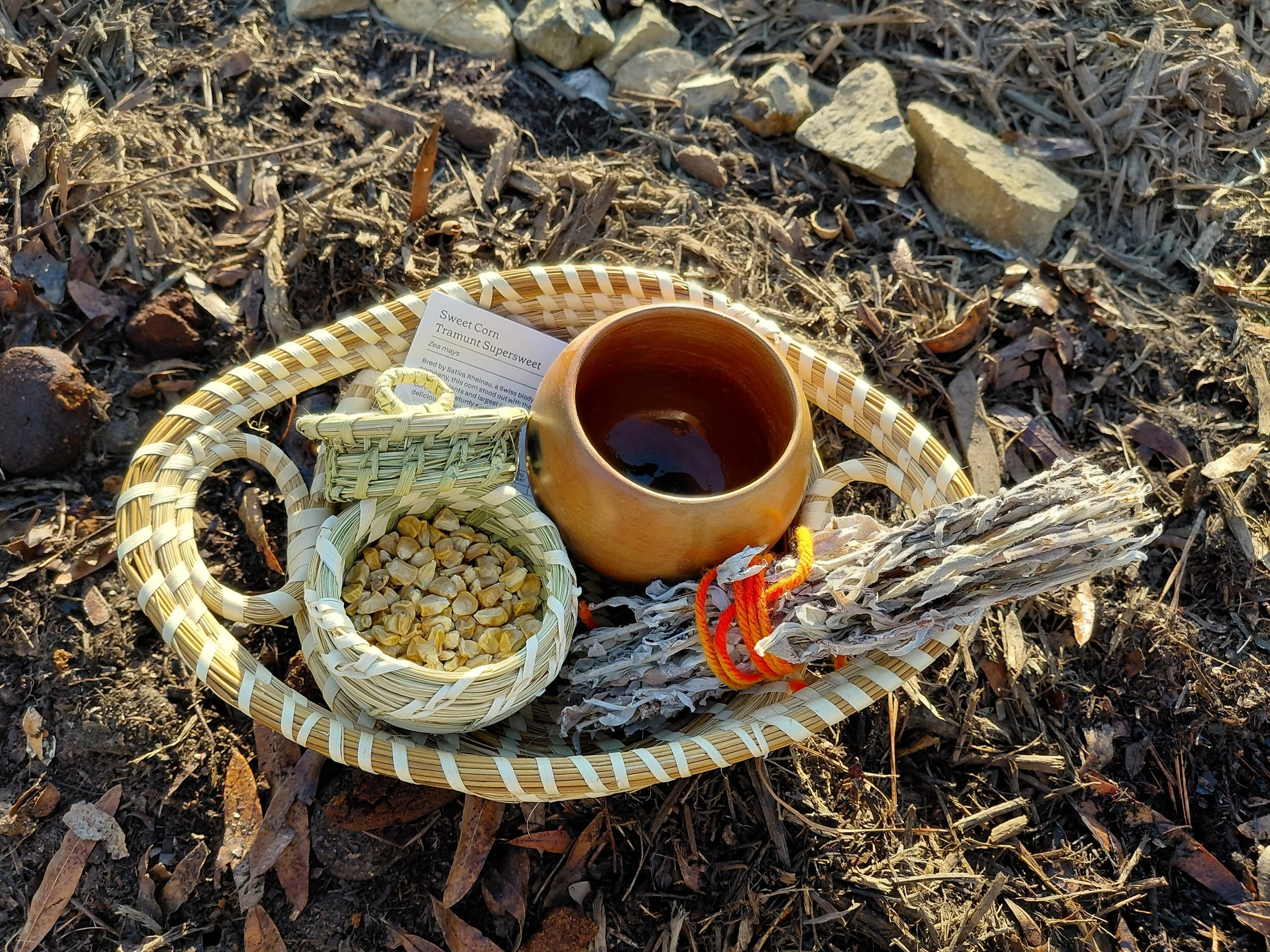
Preparing to plant sweetcorn in our 3 Sisters Garden, a wonderful example of polyculture horticulture with corn/maize, beans, and squash.
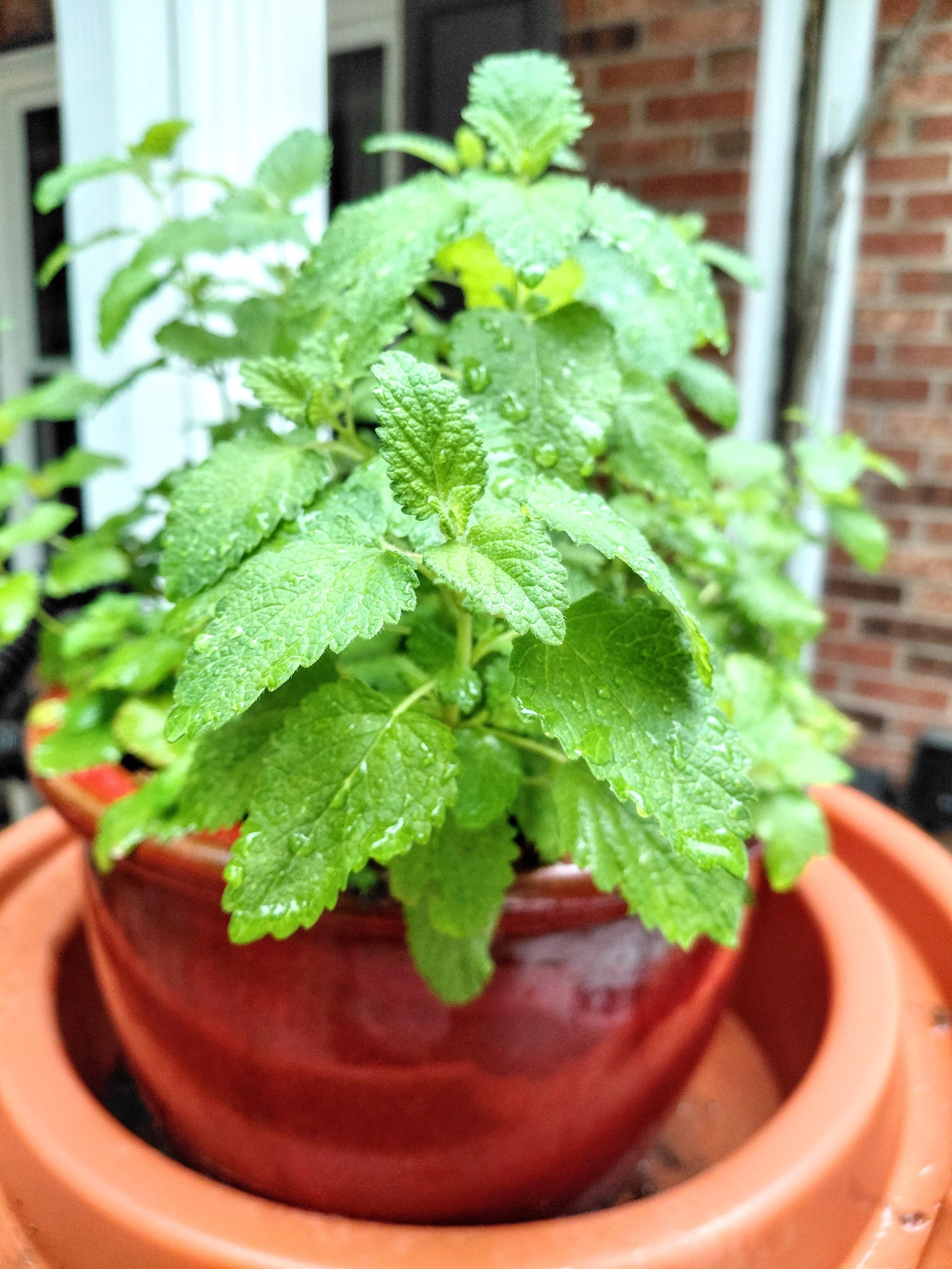
Fragrant and calming Lemon Balm growing abundantly in a pot on top of a rain barrel.
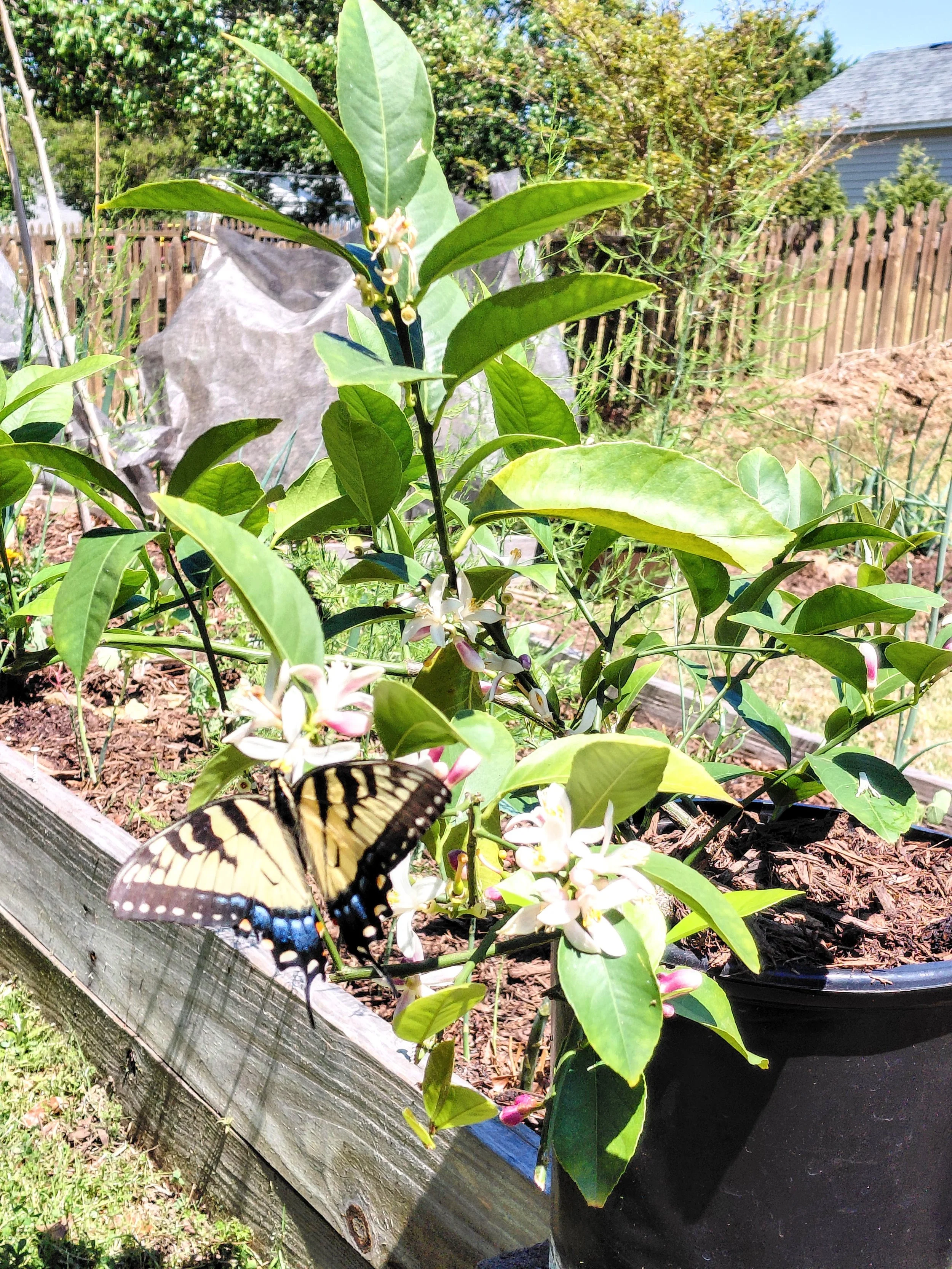
Eastern Tiger Swallowtail butterfly visiting the flowering lemon tree in Finlay’s Garden.